Prior Planning and Preparation Prevents Piss Poor Performance.
This mantra has been drilled into me since day one of life in the army. In fact it was one of the very first things our training staff said to us, and its stuck in my head ever since. Failing to prepare is preparing to fail!
With this in mind, and with it being winter and snowy in the mountains, many people are heading out into it for the extra challenge and beauty this represents. This post is the first of a handful of articles about surviving in the winter environment. This post is about the way I pack my kit and what I carry every time.
The next post is going to explore some different scenarios in the mountains and what went wrong, why and how we can learn from it. After these posts I will go through what I have in my emergency kit and emergency skills that are important to know.
Packing my kit
I pack my bag the same way every time without fail so that I know where I can find things in any weather at any time.
Core kit
After much trial and error, I have fallen in love with the ‘Lowe Alpine Air-zone Pro’ backpack (pictured below.) This rucksack is a 45ltr bag which, while a little larger than many people want to use, is perfect and works for me no matter the weather or the terrain. The bag itself has very little on the outside that can get trapped or caught in things. It has a single large outside pocket with an elastic retaining strap perfect for a helmet. The bag also has a zip on the outside that allows you easy access to the inside, there are 2 elasticated pockets on the side to store water bottles or thermos flasks. Last but not least the bag has a hip belt with pockets on.
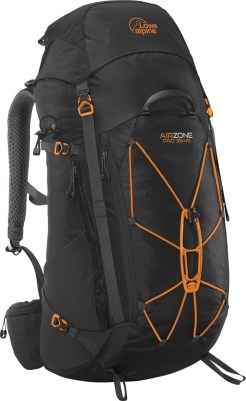
This bag can fit everything I could possibly need inside of it:
Each of the items stored inside are kept in different coloured waterproof bags.
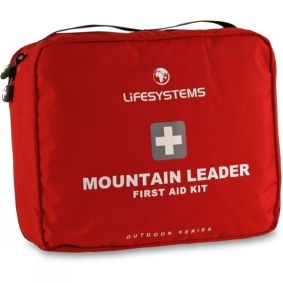
The first thing put inside no matter the trip i’m on is my first aid kit. Again my first aid kit is large and designed for groups of people, it is the life systems mountain leader first aid kit. This first aid kit comes stocked with lots of mountain essentials and I have stocked it up with my own additions as well. Again it is a bit larger than most people would like but I have never been in a first aid situation and not had what i needed inside.
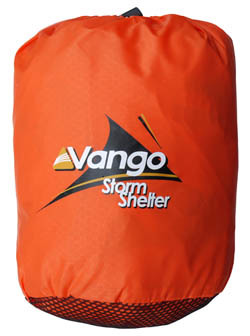
Along side this in the base of my bag is my storm shelter from Vango. I have 2 of these, depending on the size of the group I am going up with. One has space for 4 people and the other has space for up to 8. Anymore than 8 people and I would take them both with someone else carrying one of them.
In the space between these at the bottom in a red waterproof bag is my stove. This is useful not just for making a hot drink and some food, but can also be used as a good emergency heat source.
Next up in a green dry bag is my spare clothes. Normally this contains a micro fleece, because these are really warm and light and pack down really small. Along side this is a couple of spare pairs of socks and a pair of gloves. This is not things I would usually use but is useful if I stop for a prolonged period of time as something quick to throw on and keep warm. Normally this is used for other people in need be they in my party or on the mountain in need. This is kept near the zip on the side of my bag as I can very quickly get to this if needed.
In a black waterproof bag I keep my down jacket and I have waterproofs in an orange coloured waterproof bag. These are put in whatever order I think they are more likely to be used. If it is raining or rain is forecast then the waterproofs will be on top, if the day is forecast to be cold then the down jacket will be on top.
On the top of everything else in a blue bag is my hat, gloves and my buff. These are here as they are the things that I will be constantly putting on and taking off again.
Next to these is my Survival Kit. This kit in itself is small and varies massively on destination and need. This essential piece of equipment is entitled to its own post and will get one soon.
In the lid pocket of my bag is my GPS, which I only use in an emergency and to track my routes on days out. In the lid pocket I also keep my camera, a head torch, a spare head torch, my knife, para cord and a 1:50000 map of the area. I carry a spare torch because it’s easier to replace the whole torch rather than just the batteries, particularly if it’s raining.
In the front pocket of my bag, connected to the shoulder strap by a piece of para cord is my main map. When I am using the map it is kept in the space between my back and my bag.
The side pockets of my bag always have a water bottle and my thermos flask.
The hip belt pockets contain my compass and some snacks or kendle mint cake.
Additional equipment
These are the things I always take with me the following things are all dependant on what my day in the mountains is going to contain.
First off is my scrambling rack that is stored on my Black diamond alpine harness. This houses a few bits of climbing protection, a few alpine quick draws along with a couple of slings and screw gate carrabiners.
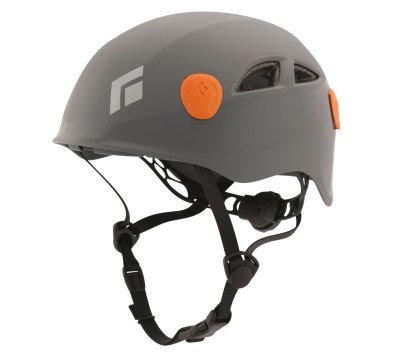
On scrambling days or on days that involve lots of high risk activities I carry my helmet. My helmet is a black diamond half dome.
My default mountain rope is a 30 meter 7.5mm rope which already has a figure of 8 on a bite on it and another screw gate. This is kept flaked into a draw string bag with the knot sticking out of the top. the bag is put in right next to the zip so that the rope can be pulled out with the bag still inside the main compartment of the rucksack but it also means that it can be taken out easily if needed.
I normally carry a set of 2 walking poles, my poles have external locks on them rather than locking internally like the screw lock ones widely in use. These are kept strapped on the outside easily accessible.
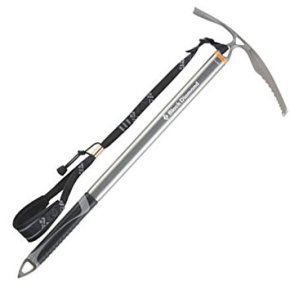
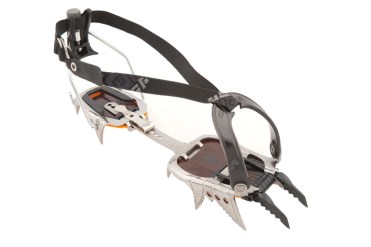
In the winter when moving around I carry my Black diamond raven Ice axe and my black diamond crampons. The crampons live in their bag near the top of my rucksack so they can be found quickly. The Ice axe lives strapped to the outside.
All of this equipment is of the highest quality you can buy and have been tried and tested by myself over many years. While there is a lot here, every single piece of it is worthless unless you have the correct knowledge to use it and the experience to know when. The most important piece of equipment you can ever pack is your brain.
Lessons to take away from this post:
Know your kit, know what it can and more importantly what it can not do.
Know how and when to use everything you take. If you get something new use it and learn how it works somewhere where your life wont rely on it.
Learn how to pack your bag, and pack it the same way every time so you can find whatever it is you need in any weather as soon as you need it.
Tune in tomorrow for the ‘Seven P’s part 2’
As always guys, any questions, ask away!!
Burf.

 Matts Mountaineering