The most important thing about being a mountaineer. Being prepared and being able to survive in an emergency situation.
Most mountaineers I know and have spoke to will carry some form of emergency kit, you know, in case of an emergency. These kits have many different names my personal kit is split into 2 main categories, Everyday Carry (things I take up every mountain with me regardless of what it is or what the weather is). Survival kit (These items are packed on an as I need them basis, this kit will be different depending on the size of the hill, the distance from roads and other people, the expected weather and the season etc).
Everyday kit.
The everyday kit I carry is things like waterproofs, spare water, extra food, spare clothes (spare micro fleece at the very least), emergency shelter, hat, gloves and a buff, I also always wear a riggers belt when I am in away, this belt is made of tough materials, with a large fold back Velcro section to close it. It also has a metal loop on the front of it that in an emergency can be used to abseil off or belay people from. Whatever bag I choose take with me always has a whistle attached to the chest strap. I always carry a map and compass when in the hills regardless of the weather or how well marked the route is, it is very easy to get lost in adverse weather conditions, to go with the map and compass I always carry a set of ‘ranger beads’ these are something I picked up in the army and is a piece of para cord with some beads threaded onto it, these are used to count the distance you have travelled so you can always know how far you have walked even if you cant see where you have come from. This is especially useful at night or in foggy/ snowy conditions. I also always carry a head torch just in case. I always carry a first aid kit with me, what it contains depends on what I am doing and where but there is always one in my bag.
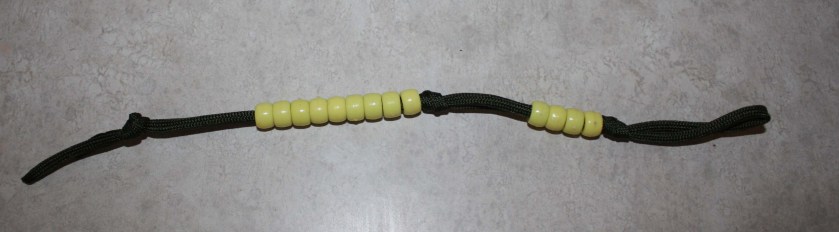
First off before I move onto my survival kit and the kind of things I carry in it I want to talk about the ranger beads as they take a little bit of explaining…
To use these you need to know roughly how many paces you take over 100 meters, for most people this is around 60 paces which is a good place to start.
When you start, after walking your 100 meters move on of the 9 beads to the end of its section.
Repeat this every 100 paces until all 9 are at the bottom.
After doing this for the 10th time move all 9 back to the top and one of the top set, 4 in this case, down to the bottom of its section.
Each one of these top beads means you have travelled roughly 1Km.
‘Survival kit’.
My survival kit is based around 3 ‘levels’ of kit.
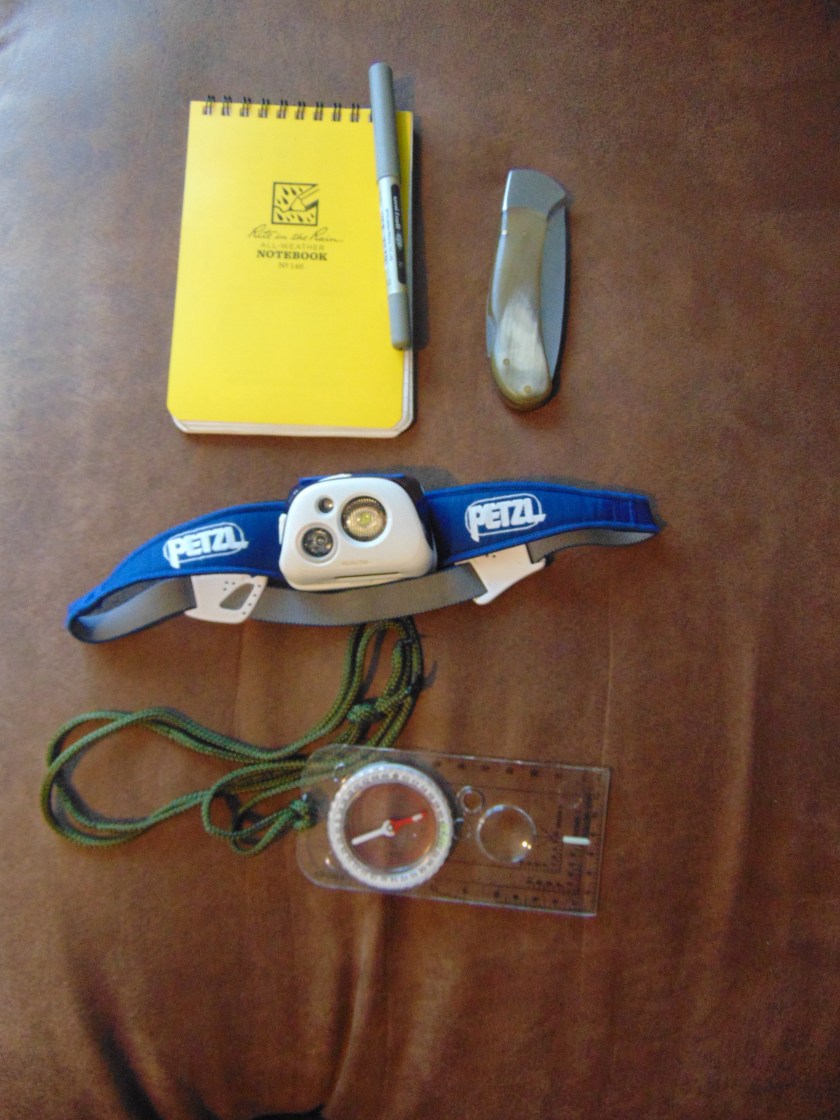
Level 1 – kept on my person or accessible without having to take off my bag
pen knife
torch
compass
waterproof notebook
Level 2 – Kept in the top pocket of my bag
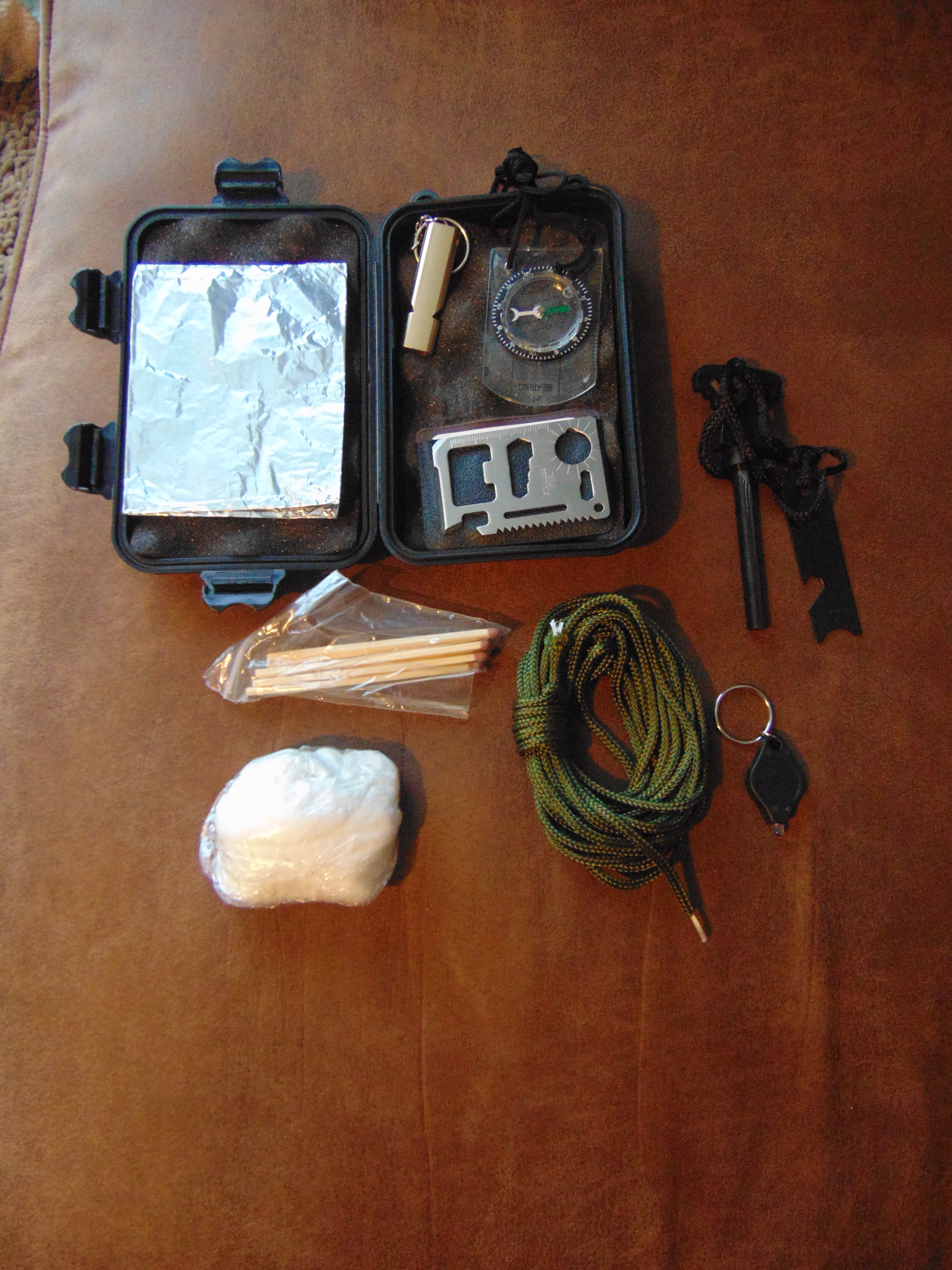
Case
Small torch
Small knife
Ferro rod and striker
Puri tabs
Para cord
Cotton wool in a small waterproof bag
Matches
Whistle
Compass
Mirror
Pictured bellow is everything apart from the puri tabs.
Level 3 – kept in my bag easily accessible. This kit never gets unpacked only to check the contents
Pouch
Tarp and pegs
Military grade Cylume – minimum 12 hours of light
Hexamine cooker and fuel – good quick heat and light
Matches in waterproof container
Brew kit
Emergency food
Survival bag
Sewing kit
Spare high power handheld torch.
Spare boot laces
1st aid kit
Multi tool
Knife Sharpener
Pictured bellow is everything apart from the Tarp
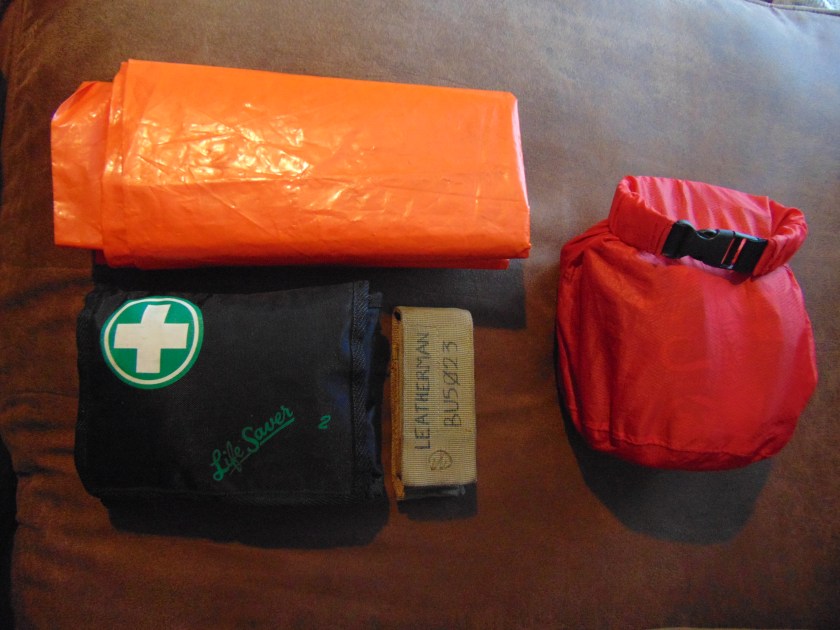
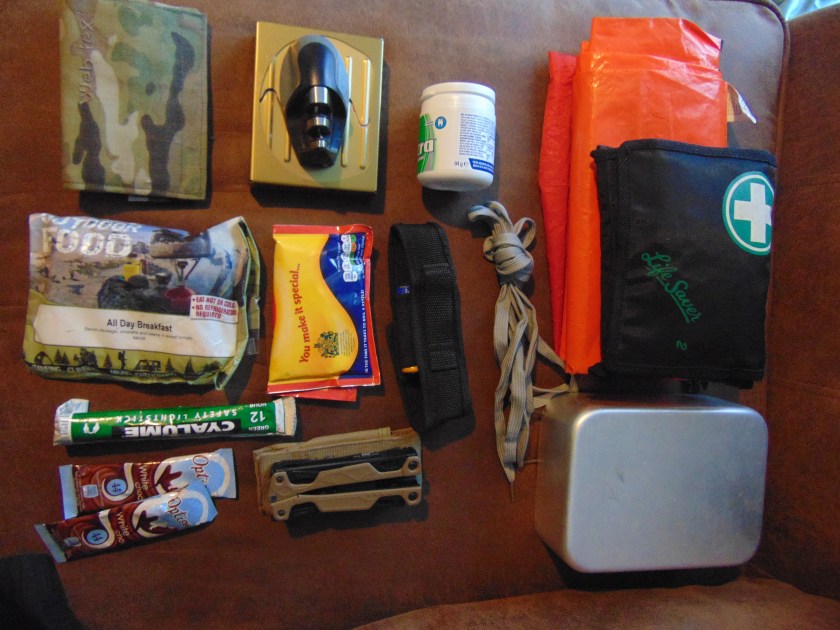
My 3rd Line gear also will include mountain specific kit depending on the conditions expected examples include…
Alpine harness
Scrambling rack
Helmet
Mountaineering rope – 30m long and thinner than a climbing rope
Crampons
Ice Axe
Pictured bellow some parts of the above mentioned kit.
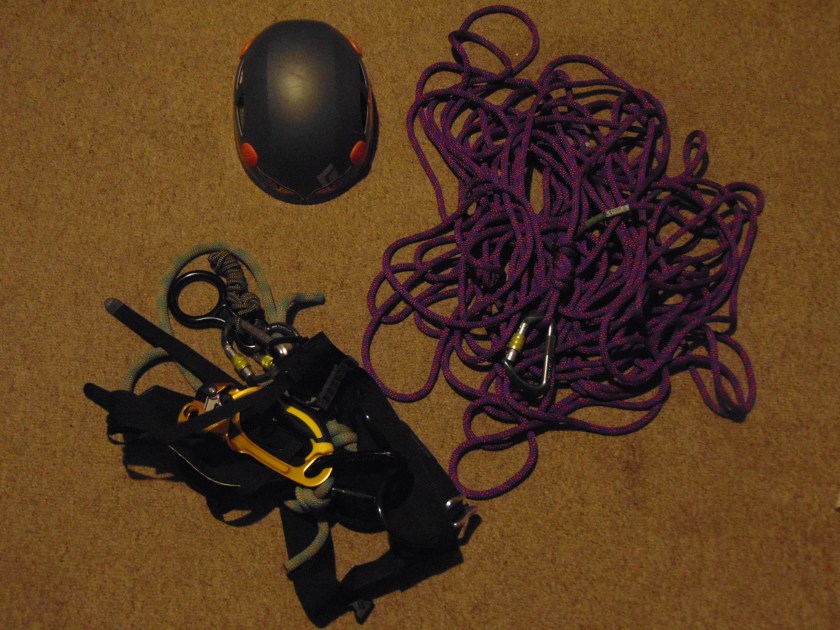
This is the main parts of my survival equipment while on a mountain, listed bellow are some examples of other people’s mountaineering survival equipment. As you will see these vary massively, most people will have most of the kit mentioned above, but they might not count it as survival kit like I do…
Example 1
Two man survival shelter,
first aid kit,
whistle,
torch x2
Example 2
Foil blanket x2
Survival bag x1
Bivvy bag x1
Food
Water
Head torch x2
Red strobing led x1
Spare batteries
Cylume stick x4
Power bank for phone
Gas lighter
Flint & striker
Lightweight stove x2
Hat, gloves & buff
Spare map
Spare compass
Spare clothes
Example 3
Water
Food
Electrolytes
Walking poles
Crampons (if icy)
Warm hat
Hooded wind proof outer jacket
Base layer
Fleece
Waterproof over trousers
Foil blanket
Whistle
Luminous snap stick
Phone
Charger/solar battery
Maps & compass
Match sticks
Spare socks
Waterproof gloves
Head-torch (just in case)
Spare batteries
Lightweight cooker
Camera
Example 4…. This one made me smile it had to make it on
Lip gloss,
hairbrush,
sweets,
selfie stick,
Spare bobble
Dry socks
Handwarmer
Codeine
Cheers guys and a thank you to all who contributed!!
Matt

 Matts Mountaineering