Thee peaks with a difference (part 3, the routes and fundraising details)

The dates have been booked for the challenge, the driver is sorted, the plan is ready, the team is ready we’re training hard, planning hard and waiting.


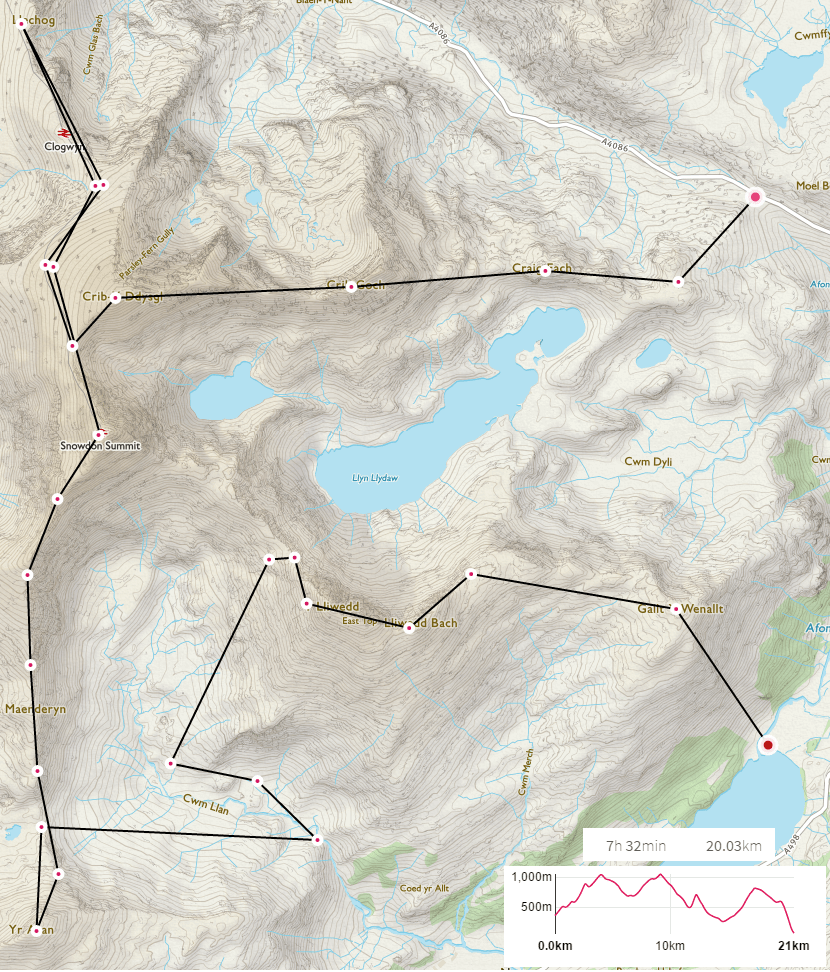
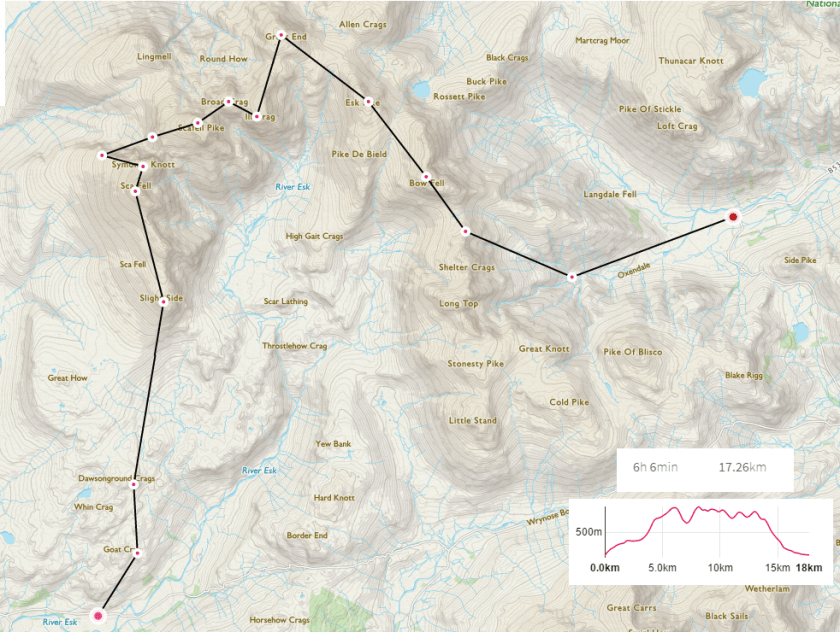
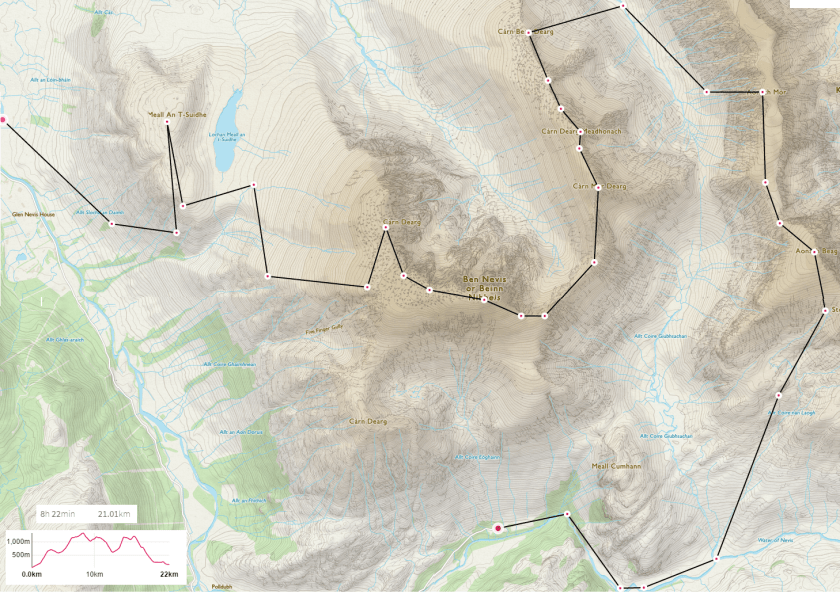
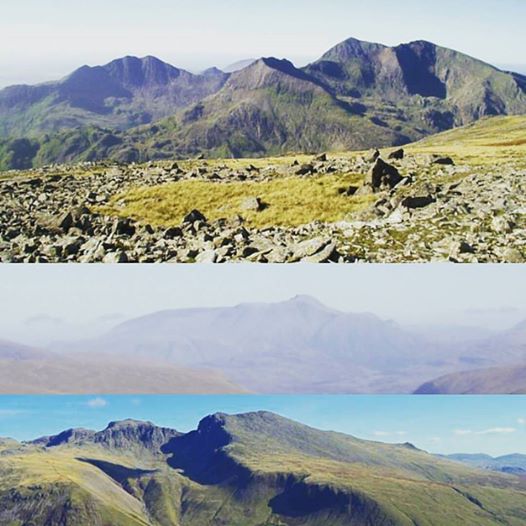
the routes for the challenge are attached underneath starting with snowdon, the route is the typical snowdon horseshoe with a few added twists, the Scarfell route is the most basic of them all, starting south of the mountain, ascending the south face then turning East after going over the summit for the descent. the Ben Nevis route will be the most challenging with not only the largest ascent but also the most technical including the CMD arrette. The diagrams on the maps show the topogrophy of the route and also the walking time and distance, this time has not taken into account any breaks we will take on the way

snowdon route plan
Snowdon route (top right to bottom right)
scarfell pike route plan
Scarfell route (bottom to top right)
ben nevis route plan
Ben Nevis route (left to bottom)


Last but not least is the fundraising details, we are not doign this purely because we all want to but are doing it for the charity the Samaritans who do a lot of work to help people with mental health issues. Please please please donate to this very worthwhile cause on the following link https://www.justgiving.com/fundraising/differentpeaks


Thanks guys, there will be routine updates between now and the challenge aswell as coverage of each mountain when we have done it and are on our way to the next one.

A tribute for a fallen comrade

This post is going to be a bit different from my normal posts, a  bit deeper and a bit darker, for that i apologise.


Mountaineering in its many forms is a very physical and demanding life style. For some the love of the life leads them on to do many amazing and incredible climbs, for some this pursuit ends in the loss of their life. There is no point beating around the bush about it, death is a  certainty in life for some it comes sooner than others.


This is, I am very saddened to say the case with one of my very close friends and climbing partners Owen Griffiths.


Owen went winter walking in the Cairngorm’s by himself and while climbing Alladins staircase on Coire an t-Sneachda and tragically fell.


What happened on the side of the mountain is mostly down to speculation as Owen was climbing alone and this is not the time or place to say anything about what happened as his friends and family are still struggling to get over our loss.


As for myself I was very shaken with this as the loss of someone so close and dear to me as Owen was in somewhere I love hit me hard, mountains have always been a place of life for me somewhere I can relax and unwind and forget about my external problems but the loss of Owen and everything he stood for has shaken me up a lot, Mountains will not just be a place of escape and unwinding relaxation but also a part of Owen will always climb with me.


Me and Owen were planning on climbing Mount blanc next year and if I am able I still plan on doing so in his memory. He was a huge part of my enjoyment of mountains and I will forever be thankful of what he has allowed me to discover and enjoy and he will forever climb with me in my heart and I hope that wherever he is he has found more mountains to climb and that he may continue flying forever more.


Thank you Owen you will be missed forever.


cheers guys

Matt

Three peaks with a difference (part 2, Meet the team)

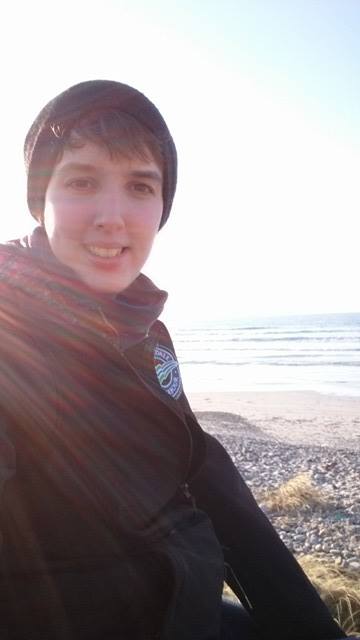
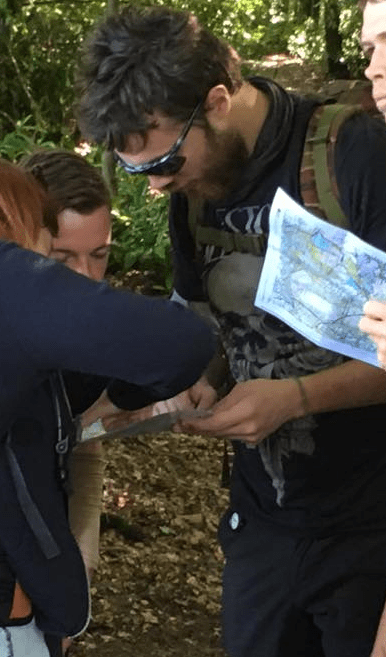
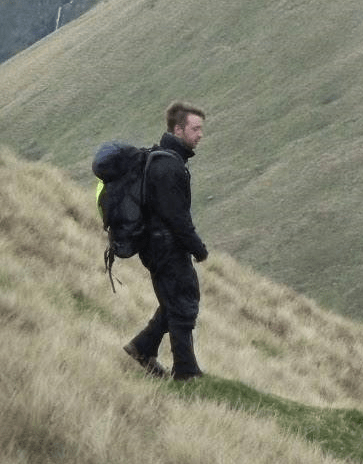
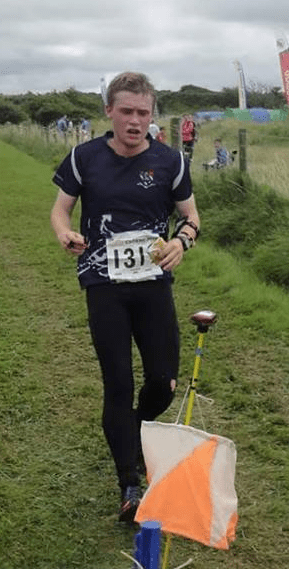
So its time to introduce my team for the challenge! There are 5 of us in the team working together covering everything that a team of mountaineers would need doing. We can all do each others job passably but we each have a speciality that we can do better than the others..

Matt Burford

burf mk1.png

Team leader and technical lead.

I am working towards my Mountain Leader award so this will make a great final mountain and expedition practice. I love the challenge of being in the mountains and organising trips away for people. The Samaritans Charity we are doing the challenge for is a very worth while charity and does a lot if good work.

Gemma Patterson

Gemma.jpg

Assistant technical lead.

I’m doing the three peaks because I love a challenge, I’ve always wanted to test myself climbing the highest peaks in England, Wales and Scotland, and this way I get to see more of them and I really care about the charity

Mark Painter

Markey mk1.png

Back up climber number 1 (can do all jobs needed adequately)

I enjoy a challenge, and have wanted to do the 3 peaks for a while, although I’ve never climbed any of them. The charity is also something that I fully support and want to help out.

Alex Tudor

alxe-mk1

back up climber 2 (can do all jobs adequately)

‘I have nothing better to do and it seems like a laugh’

I love this sort of thing and have always enjoyed being in the mountains, it seems like a challenge I’ve never been up Ben Nevis. The charity is a nice bonus as well as they do a very worthwhile job.

Sean Rowe 

sean-mk2

Navigational Lead.

I’m the type of person who lives outdoors and couldn’t imagine being anywhere else. I enjoy the challenge and believe that if my passion is helping others then there is no excuse not to do it. This especially extends to helping the Samaritans charity.

Three peaks challenge ‘with a difference'(part 1)

Hi guys,


Sorry I’ve been busy for a while out having fun making the most of the snow that’s been here..


In the summer I am heading a team of 5 people attempting the Three Peaks Challenge for charity. The challenge as we are planning it is a bit different, so rather than doing the 3 mountains in 24 hours walking up the easiest route and then turning round and back down we’re planning on doing it over 3 days traversing each mountain from one side to the other. 3 Massifs, 3 traverses, 3 days!


We all decided that the three peaks as they are normally done is less of a mountaineering challenge and more of an endurance and speed thing, speed especially we all felt makes mountains more dangerous, so while it will take us longer to do we feel that it is safer this way.


This post is here as the opening in a short series of posts I will be doing about the challenge and where we’re going, how we’re getting on, the routes we’re taking, the challenges we face and the training we are all doing to get ourselves ready. The first post following hot on the heels of this one either tonight or by tomorrow lunch time will be an initial introduction to the team who we are, what our part is in the team etc..


Keep your eyes peeled will update soon!


16299348_1294160777288656_9008440676273499428_n


Pen-Y-Fan

Happy New Year guys!

So yesterday was a first for me. It was my first time taking someone with no mountain experience at all up a mountain. I loved it, and so, more importantly did the client.


Here’s a few pictures of the day..


We left about 8 o’clock and got to Pen-Y-Fan at about 9:30. after parking the car we left and made our way up to  the summit, the weather wasn’t as good as we had hoped for when we got closer to the top. Fog banks closed in again as they did last time I was up there. We got to the summit without any problems and took the obligatory photos from the top. We headed back down to the slightly lower summit at Corn Du and did a small amount of scrambling while coming off.

Here’s to many more mountains in 2017!

Thanks again for reading this small report on the trip. Feel free to ask any questions.

Next post is going to be a bit about my plans for the year as a mountaineer, I have some big things in planning for next year.

Cheers guys

Burf

Pen-Y-Fan walk 31/12/16

Hi guys,


I’m going back up Pen-Y-Fan on New Years Eve, after taking my partner up the other day I got a message asking if I’d mind taking him up the mountain for the day and we decided on New Years Eve, of course I said yes!


So here’s the plan.

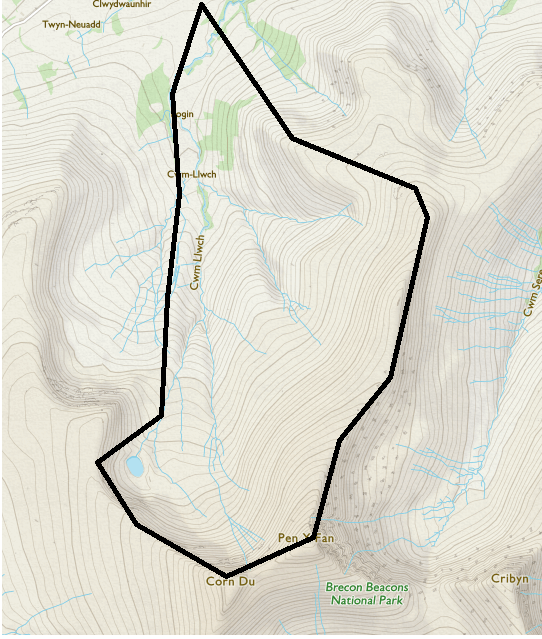
route-plan


We are starting at the car park on the left at the storey arms. we’re then heading up to the obelisk at the northern most part of the route then we’re following the ridge to Corn Du and the smaller summit then heading onto Pen-Y-Fan and finally swinging back around and heading back down off the mountain via the more we trodden ‘motorway’ then back along the path by the road to the pub and the car.


Pictures will follow on New Years Day!


cheers guys..

Matt

Pen-Y-Fan round up 22/12/2016

So yesterday I took my partner up Pen-Y-Fan.


It was cold! very cold, it wasn’t frozen but was very foggy. we started our ascent and the weather was lovely but as is the way with most mountains but especially those in Southern Wales we got part way up and the weather changed dramatically! The fog came in and we couldn’t see a thing. From roughly 800m upwards all the navigation was done with a map and compass to check what path we should have been on etc as we couldn’t see anything in the distance to tell us where we should have been going. We got onto the main summit ridge and hit a huge fog bank it was amazing. We bi-passed Corn Du on her request and headed up to the true summit at 886m. On our traverse of the ridge to the summit we dropped down behind Corn Du and the wind disappeared, it was lovely. When we got to the summit it was again extremely windy so we took a couple of pictures to remember the trip and then turned around and headed back down, as is always the way with mountains on our way down the weather improved again and the summit broke through the clouds in an amazing view of what we had just climbed! Typical!!


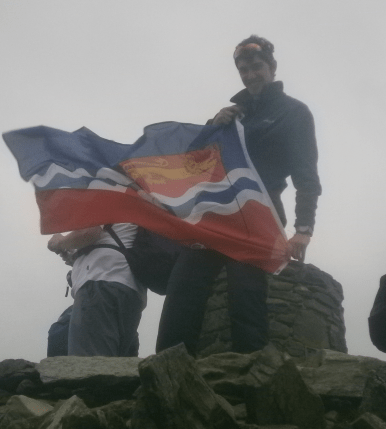
The second of the above images is me stood on the summit with the flag of my county. there is a story behind this.. Every mountain I summit I take the flag with me and fly it from the top in memory of my Nan, she died fighting cancer 2 years ago she was very patriotic, not just of The United Kingdom, but also of the County she grew up in (Herefordshire) she also loved being outdoors and getting to the top of hills as she could see all sorts of animals and see outstanding views, so she has travelled with me in that flag ever since. Later on next year I plan on doing some fund raising for a Cancer charity yet to be decided so watch this space!


cheers guys

Matt

Pen-Y-Fan

Taking my Partner up Pen-Y-Fan in South Wales on Thursday, Been waiting for months to get back into the mountains and I cannot wait, stand by for a review of the day and pictures on Friday.


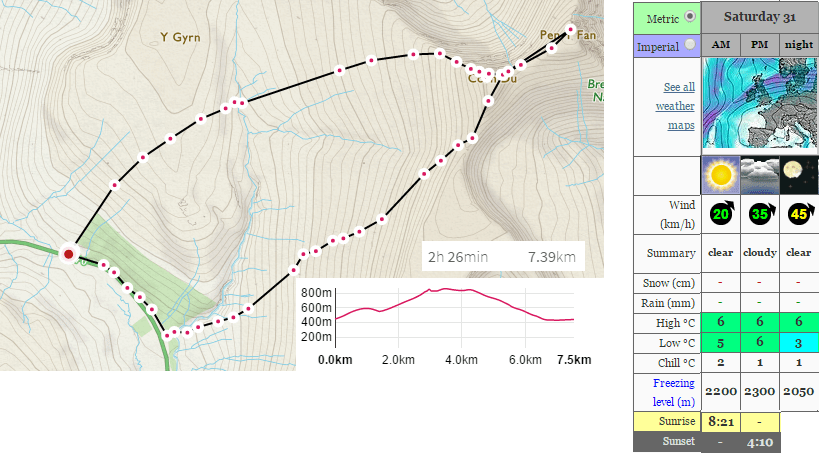
The plan is we will be doing a horse shoe style walk, parking in the car park under the north face of the mountain and then walking between the main spurs of the mountain eventually climbing onto the main ridge, when we get to Corn Du we will then traverse the small arete onto Pen-Y-Fan itself and then along the ridge again to the North and finally off the face of the mountain back to the car park. The weather looks passable, no snow or rain, a 35Kmph wind blowing to the East, so we will be sheltered from the worst of it until we are on the top of the mountain. The wind chill factor is going to make it feel about -4’c.


See bellow for a basic plan of the route route-map-ridge-horseshoe


Personal opinions on equipment used in mountaineering

This is the first of a series of posts  ‘an introduction to the technical Mountaineering kit and equipment’ I use to keep me safe and comfortable while climbing/ scrambling or any other mountain related activity.

First an introduction to the different types of equipment that is used in a mountain environment and the examples of that equipment that I use. My reasoning behind using these specific types of equipment will be discussed at length in different articles in the not too distant future

Note. Before I begin with this article please be aware that everything in this article is my own personal opinion built over many years climbing. I recommend you get some introduction and physical instruction in how to use the things mentioned here. Rock climbing and mountaineering in general can be very dangerous to those people that do not properly know what they are doing and I cannot accept any liability for any injuries that occur while doing this.

Ropes

These are pretty self-explanatory, there are 2 main sorts of climbing ropes used, these are dynamic and static ropes. In simple term’s dynamic ropes have a bit of stretch to them and are safer and a little comfier to fall on while static ropes do not stretch very much at all. Both of these ropes are what are called kernmantle ropes, kernmantle construction means that the part of the rope designed for strength (the middle) is protected from cuts and abrasion by the outer sheath. Dynamic ropes come in 3 distinct types, single ropes, half ropes and double ropes. Single ropes as the name suggests are designed to be used on their own, double ropes are designed to be used in the same way as single ropes but both MUST be clipped through each piece of protection to work correctly. Half ropes are a middle ground between the two, these are designed to be clipped into alternating pieces of protection.

                My ropes

                1 x 20m static rope – I rarely use this unless I am taking friends new or not very confident climbing out for a day at the crag and then will use it to set up an anchor for them to top rope the route on.

                1 x 70m static rope – as above very rarely used. Only properly used if I am taking people or myself for a day of abseiling this allows me to set up the complete abseil with only one rope and minimal extra equipment (in climbing simple is generally safer and this is even more so when abseiling as, while many in the climbing community shun it as a skill due to it being more dangerous than climbing, I believe that it is an inherent part of understanding a crag and is if properly respected a very fun way to spend an afternoon with friends and a good way to experience the cliff without having to climb it.)

                1 x 60m dynamic single rope – this is the rope I do most of my outdoor climbing on as it is long enough to do most pitches I have seen and in a relaxing day a single pitch crag lets me monitor or chat to both the belayer and the climber.

                2 x 50m half ropes – these ropes I have not used a great deal in this country but expect to be using them a fair bit in my foray into the Alps next year and most years after that.

                1 x 40m single rope – this rope is my general mountaineering rope, it is fairly light (being 20m shorter than my other single rope) and is bright yellow so if needed in an emergency it is very easy to find and see while you are using it even at night.

Harnesses

Harnesses are the most personal piece of equipment that a climber can own and each and every one of us will have their own reason for using the one they own and find that theirs is infinitely better than anyone else’s. in the broad spectrum from a mountaineering background there are two main types of harness used these are the alpine harness and the regular climbing harness. Regular climbing harnesses are just that a harness designed to worn for a relatively small period of time and nice and comfy to rest in when needed while you are climbing. Alpine harnesses are generally only used by mountaineers who are spending a lot of time walking or scrambling and need something they can put on nice and easily and quickly over multiple layers of clothing, these types of harnesses usually have leg and waist loops that can open completely to allow you to put these on while wearing crampons or ski’s.

                My harnesses

                Black Diamond Alpine Bod – this is my new favourite alpine harness due to its simplicity and it is very easy to adjust and put on in a hurry even while wearing lots of layers and crampons.

                Edelrid Jay – my go to climbing harness is the Jay by Edelrid. It is simple to use and comfy to wear. It comes with 4 gear loops. Slots for extra carabiners to be attached to hold extra equipment and comes with a haul loop at the back for attaching one of the static ropes to so we can haul any equipment up a climb after us.

Protection

Nothing says rock climber like seeing someone walking around with a harness on with a load of metal stuff hanging off it and sounding like a very out of tune wind chime. This is where a lot of climbers money will go and rightly so as this is the stuff that in the event of a fall will save your life if properly used. Climbing protection comes in 2 main styles these are; active and passive. Passive protection is protection that does not have any moving parts. The most basic are nuts and hexes. Nuts are a slim tapering piece of metal on the end of a wire. These can all be inserted into different types of crack and used in a multitude of ways. Hexes are much like nuts but a bit heavier duty and, you guessed it they’re a hexagonal shape. They are used in much larger cracks. Active protection is something with moving part. The most well-known example of this type is the cam. These can be retracted to insert into a crack and then expended to grip (or cam) themselves in place making them very hard to get out likely to fall out.

                Passive

DMM nuts 1-11

DMM micro nuts 1-4

DMM Offsets 7-11

                Active

Wild country friends 0.5-3 (in .5 increments)

Slings. Slings are loops of webbing that have many different uses in the climbing industry. In general, they come in 2 different forms; Nylon and dyneema. I use both types in many different sizes for a multitude of uses.

Quick draws

Quick draws are really simply two carabiners linked together with a piece of webbing. These are used to decrease rope drag and make the protection you have placed less likely to walk out of the wall. Once again I use a variety of quickdraws in different lengths, the last bit to be mentioned here are something called extender draws, I find these very useful these are a short sling with a carabiner on either end looped back on itself to make a small quick draw that can be extended if needed.

Footwear

There is a staggering amount of footwear available for people looking at getting out into the mountains but here are the main pieces I own and use regularly.

                Climbing shoes

Red chilli Sausalito

                Trainers

La Sportiva Akasha

                Approach shoes

La Sportiva Boulder X – these are my favourite pair of shoes I own as they can also be climbed in fairly successfully

                Walking boots

Scarpa Baltoro GTX

                Mountaineering boots

La Sportiva Nepal EVO – these boots are also crampon compatible.

Belaying: there are a huge amount of belay devices available for use by climbers but I use a guide plate by OCUN as this device has teeth that enable me to catch my partner when they fall and also when rigged specially can allow a certain amount of free movement at the top of a pitch when belaying a second.

Winter walking equipment: for walking/ scrambling in the mountains in winter there are two main pieces of equipment needed by a mountaineer (one of which in my opinion you are not a mountaineer until you have.) these are a walking ice axe and a set of crampons. The axe once again is a complete personal choice and varies massively from climber to climber, the one I use is not liked by my climbing partner and vice versa. My axe is a black diamond raven with bottom grip, mine is slightly longer than most people will recommend (again personal preference) at 65cm and the grip at the bottom lets me feel more secure when using them. The crampons I use are once again from black diamond and are a 12 point general mountaineering pair with anti-balling plates.

Other: prussiks are a loop of climbing cord that can act as a third hand to grab the rope when you need to let go for whatever reason. I normally carry 3 of these as they are indispensable. One ready to go attached to a screw gate carabiner on my harness, another attached to my nut tool as a back up and way to keep the tool attached to me when im using it. The last one is attached to my rope knife again so that it is always attached to my harness should I drop it or need to let go of it for any reason.

The last thing on my list is gloves, I own 2 main pairs of climbing gloves again both from black diamond the one is a set of belaying gloves that allow me to keep a secure grip on a rope and also let me put a thin pair of gloves on underneath when its cold. The last pair are a pair of leather rappelling gloves to protect my hands while I’m abseiling. Both of these gloves are only half finger allowing me the dexterity needed to be able to tie and untie knots.

As before with every post I look forward to any questions you have and will answer any of them I can

Matt
Kit list for South Downs Way

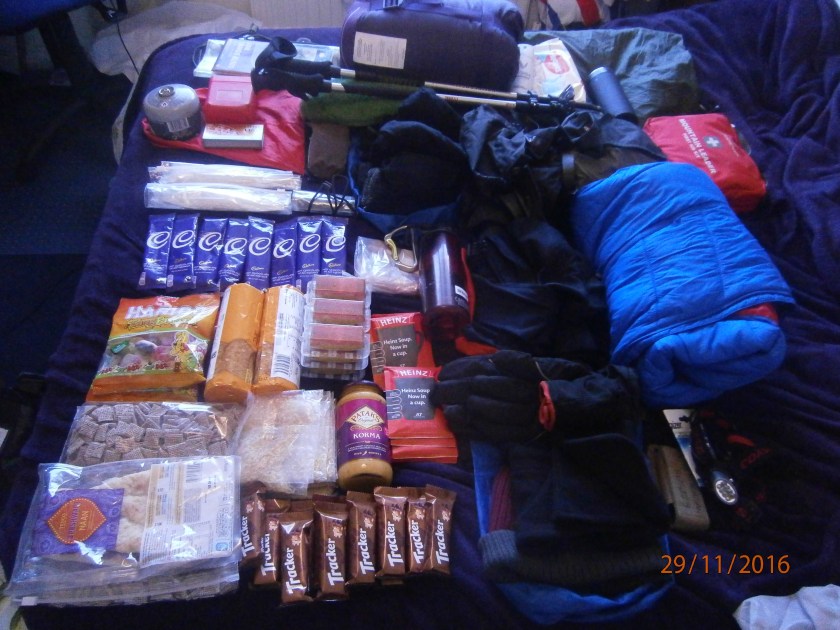
Bellow is a picture of all the things I will be taking on my upcoming 100 mile hike of the South Downs Way.


First a list of everything for you;

from top to bottom left to right….
line 1
Map and map case, sleeping bag, deoderant, wet wipes, toothbrush and paste, flask. 40ltr dry bag.
line 2
walking poles.
line 3
stove, extra fuel, matches all in a dry bag, portable charger, small towel, spare underwear and socks in another dry bag, gaiters and waterproofs, first aid kit.
line 4
two instant porriges in ziplock bags, instant hot chocolate, ham and cheese, waterproof case for phone, 1 ltr drinks bottle, thermals, spare t-shirts, down jacket for evenings in camp.
line 5
harribo (morale in a bag), oat biscuits, small pocket size cakes, frosted shreddies, boil in a bag rice, curry sauce (little luxury but i’m carrying it. cup-a-soup, gloves (2 pairs).
line 6
naan bread (ready cooked again just eat) tracker breakfast bars (x12) hat and buff (warm kit in another dry bag) leatherman, headtorch, normal torch and batteries.


Sean Will also be carrying food for us both so this is only half of the food for the expedition. As for water, you will notice I have only got a single 1 ltr water bottle this is because there are lots of fresh water taps on route for us to refill at, we felt that due to the amount of food we would be carrying we would travel as light as is possible on other things.


OLYMPUS DIGITAL CAMERA

Design a site like this with WordPress.com
Get started